
In the heart of Buckinghamshire stands Stowe Landscape Gardens, one of the grandest English gardens in the country. Inside this place, there is a special walk called the Animal Tracks Trail. Families and nature lovers can use it to explore trees, lakes, and the signs that wild animals leave behind.
The Beauty of Stowe Landscape Gardens
Stowe is not just a garden–it is a landscape full of stories. Built in the 18th century, it was designed by famous gardeners like Capability Brown and William Kent. They wanted to make nature look like a painting, where every path, hill, and tree has meaning.
Walking through Stowe feels like moving inside art. The sky is reflected in lakes, long bridges cross still water, and temples stand quietly between trees. The garden is part of the National Trust now, and it stays open for visitors all year.
Even if the place looks big and royal, it is also friendly. Many families come for a slow day outside, and children can run safely. Every season changes the color–pink flowers in spring, deep green in summer, and orange and gold in autumn.
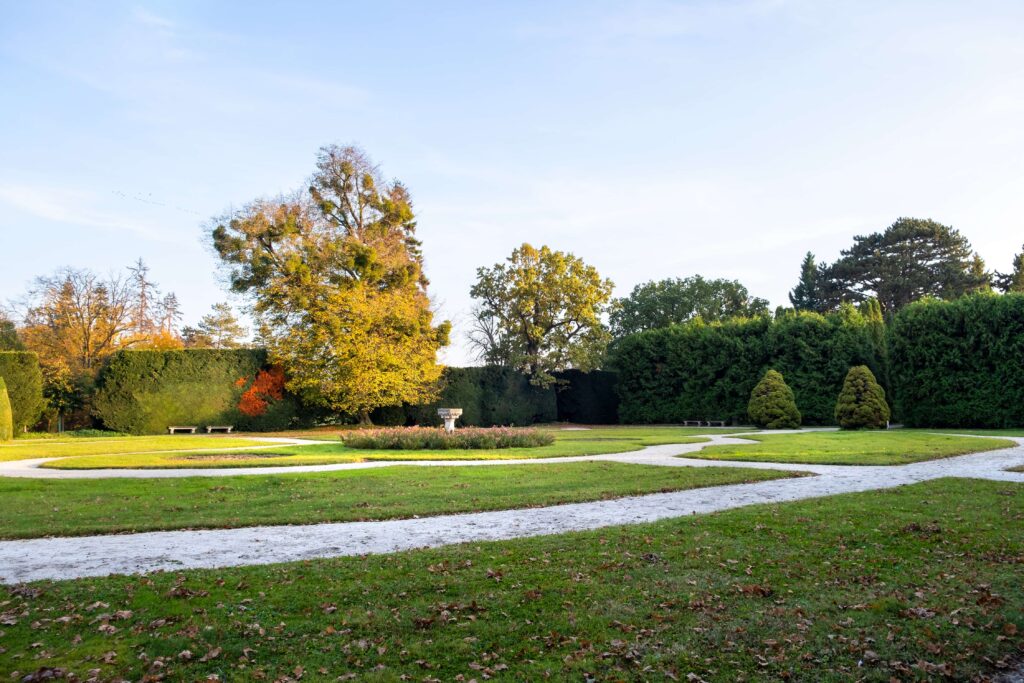
Famous landmarks inside Stowe Gardens
- The Palladian Bridge–a graceful bridge over the lake, built for view, not traffic.
- The Temple of Concord and Victory is on a hill and is a sign of peace.
- The Gothic Temple–with high windows and stone towers, giving a medieval feeling.
- The Queen’s Temple–elegant and calm, surrounded by tall trees.
These landmarks are not only beautiful objects; they were made to show ideas about freedom, nature, and balance.
What Is the Animal Tracks Trail?
The Animal Tracks Trail is a small route inside Stowe Gardens made especially for families and children. It is around two miles long and passes through quiet woods and open fields. Along the way, there are wooden signs with shapes of paws, hooves, and claws. Each track shows which animal lives or walks nearby.
Children can follow the trail like a game–finding each mark and learning new facts about British wildlife. The idea is simple but fun: walking while learning. Parents enjoy it too, because it brings both exercise and education.
Some parts of the trail go near the lakes, where ducks and swans swim. Others lead through the woods, where foxes and badgers sometimes appear in the evening. The route is not hard, and paths are flat enough for strollers and wheelchairs.
Nature and Animals in the Gardens
Stowe is home to many animals, not only the ones marked on the trail. Early in the morning, the park feels full of sound–birds singing from trees, geese calling from the water, and squirrels jumping between branches. Rabbits swiftly traverse the grass, and occasionally, one can spot deer in the distant field.
The garden is not wild, but it keeps nature close. The mix of open land and forest provides space for many species. Volunteers help to protect this balance, planting trees and cleaning lakes when needed.
Animals visitors might notice along the trail:
- Red fox–often seen in quiet parts of the wood.
- Roe deer–shy but sometimes visible near the water’s edge.
- Grey squirrel – playful and curious around benches.
- Woodpecker – loud knocking sound in tall trees.
- Swans and ducks–swimming slowly on the mirror lake.
Seeing them is part of the charm, but even if they hide, their tracks and sounds remind visitors they are never far.
Learning Through Exploration
The Animal Tracks Trail is more than just a place to see animals. It teaches you how to notice things that most people don’t, like the shapes of footprints, broken twigs, nests, and the smell of plants. Children start to use eyes and ears more carefully, understanding how nature speaks in quiet ways.
Some boards on the trail pose questions: “Who walks here at night?” or “Which bird leaves these marks?” It makes the walk feel like a discovery game. There are no prizes, but the learning stays longer because it feels like an adventure.
Families often bring small notebooks to draw what they discover. Teachers also use this trail for school trips, because it mixes biology, art, and exercise in simple form.
The Design and History Connection
Behind the fun trail, there is deep history. The people who designed Stowe believed that gardens should teach moral lessons. Every building and path was made to show something about human life, power, or peace. The Animal Tracks Trail fits this idea in a modern way–it connects people again with nature, showing respect and curiosity.
Walking there provides time to think. The garden is big and quiet, so you can walk for minutes without running into anyone. The wind blows through the trees, and old temples stand like quiet observers of time, this place feels like it has been around forever because of the mix of art and real life.
Many people who visit say that the trail helps them relax. They look at the ground, the sky, and the water instead of screens or noise. It’s easy, but it feels important, like remembering how to be part of the earth again.
Visiting Tips and Experience
The best time to walk the Animal Tracks Trail is morning or late afternoon, when animals are most active. It is good to bring water, wear comfortable shoes, and carry a small map from the entrance. The path is easy to follow, with clear wooden signs.
Stowe Gardens has a visitor center, café, and toilets near the main gate. The whole area is managed with care–bins are few, so people are asked to take rubbish home. Dogs are allowed on a lead, but not inside the formal gardens.
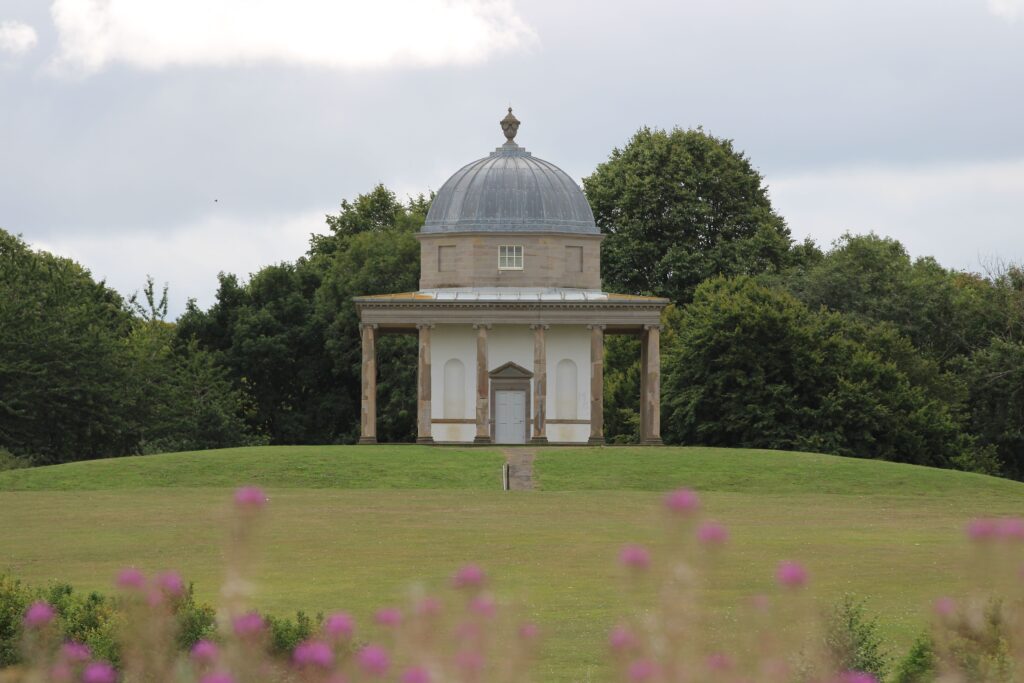
Visitors can combine the trail with other walks in the park. Some paths lead to Stowe House, a big private school next to the gardens, while others go around the lakes or through the woods.
A full visit can take half a day, and people usually bring picnics. Sitting under big trees and hearing birds makes time slow down. The mix of family fun and quiet beauty is what makes the Animal Tracks Trail stand out.
Why Stowe Gardens Stay Special
Stowe Landscape Gardens shows how humans and nature can live in harmony. The Animal Tracks Trail adds a new layer–it connects the history of art with the living world. Children learn, adults rest, and everyone finds calm in the same place.
When the walk ends and people return to the car park, they often look back once more at the lake and temples. The memory stays clear: soft light, animal prints on the path, and wind moving through grass.
It is not a fast adventure but a slow experience–one that reminds us how nature, when respected, can teach and comfort at the same time.